
 Tiếng Việt


Going back to 2021, the MaraX launched and carved out a unique place in the market as the world’s only heat exchanger E61 machine with dual electronic probes — a technology that allows simultaneous monitoring and control of both brew water and steam temperatures without needing two separate boilers.
In 2022, Lelit became part of Breville, the globally renowned premium kitchen appliance brand. This meant that some of Breville’s proprietary technology patents would eventually make their way into new Lelit machines.
But there was no rush to update just yet. It wasn’t until 2026 that the Lelit MaraX V3 officially introduced itself to the home coffee community. The MaraX3 is one of the machines in Lelit’s new Pagaia product line.
So how has Breville’s technology transformed this machine? Is it genuinely better and more worth owning than the previous MaraX?

The three color versions of the Lelit MaraX3 espresso machine.
THE EXISTING FOUNDATION OF THE LELIT MARAX
Before diving into the new technology, let’s walk through a few of the core features that made the MaraX so well-loved for so long:
- Ultra-compact: At just 22cm wide and 41cm deep, the MaraX fits comfortably in any home brewing space, large or small.
- Legendary E61 group head: A group head with outstanding mechanical qualities in the coffee world — not only beautiful but thermally more stable than standard machines.
- Large heat exchanger boiler: Brew espresso and steam milk simultaneously without waiting.
- 2 separate brewing modes: XMode Coffee for espresso enthusiasts and XMode Steam for those who focus on lattes and cappuccinos.
- Burn-proof steam wand: An essential feature on any premium home espresso machine.
- Olab Silent Green vibration pump: Nearly as quiet as premium machines using rotary pumps.
- Ready indicator light and low water warning light: No guesswork about whether the machine has reached temperature.
- Mechanical power switch with backlight: Can be left permanently on for use with a smart plug timer.
- Dual gauge: Displays boiler pressure and pump pressure simultaneously.
- Lelit-exclusive 58mm double-spout portafilter: Channels the espresso flow forward for easy visual monitoring.
- Color options: Black / White / Steel.
The MaraX was well-loved, but it was never a perfect machine. It needed upgrades to keep up with the steadily rising expectations of home espresso enthusiasts. So how far has Lelit taken it?
With the new Pagaia flow control integrated, the MaraX3 can now freely brew across the full spectrum from ultra-light to dark roasts — something the previous MaraX never did particularly well.
PAGAIA FLOW CONTROL — THE BIGGEST DIFFERENCE IN THE MARAX3 UPGRADE
Pagaia means “paddle” in Italian. But before talking about Pagaia, it’s worth addressing a shift in modern brewing culture.
Many people today are moving toward light roast coffees for the complexity of flavor they offer. However, older-generation espresso machines were not designed to optimize for this roast level. Light roasts need pre-infusion and a declining pressure profile toward the end of extraction, because resistance drops faster than with dark roasts.
Pagaia is Breville’s patented electronic flow control system. It enables reasonably precise pressure profiling, opening up new brewing approaches suited to different styles and roast levels.

The Pagaia paddle on the MaraX3 is essentially an electronic inverter controlling water flow rate.
On the MaraX3, Pagaia is mounted on the left side of the machine. Through its wooden accessory, it rotates freely to control flow rate from 0 to 6ml/s — allowing users to adjust flow and pressure in real time at any stage of extraction.
VIDEO: HOW TO USE THE PAGAIA FLOW CONTROL ON THE LELIT MARAX3
Beyond a standard espresso pressure profile, Pagaia also allows users to brew modern-style Soup espresso by holding pressure at 1 bar throughout extraction. Simply grind coarser, target an extraction ratio of around 1:3, and the result is a light, layered, multi-dimensional cup.
WHY DOES THE MARAX3 USE AN ELECTRONIC PUMP INVERTER INSTEAD OF A MECHANICAL FLOW CONTROL VALVE?
Now that Pagaia’s purpose is clear, a natural question arises: why didn’t Lelit simply mount a mechanical flow control paddle onto the E61 group head like on the Bianca, rather than going with an electronic inverter? The design already exists — less development effort, same practical result, right?
On the older MaraX, installing a low-flow mechanical valve still let the pump run at full power, with excess water cycling back into the reservoir. If this low-flow state was sustained, heat loss would occur, creating inconsistent extraction conditions. And since the MaraX uses a heat exchanger boiler, it inherently can’t match the thermal stability of a dual-boiler machine.
The inverter solves this because the pump only pushes exactly as much water as needed into the coffee puck — resulting in more stable temperatures and more consistent, repeatable shots on the MaraX3.
IF PAGAIA IS THIS CAPABLE, WHY NOT PUT IT ON EVERY MACHINE?
Given these characteristics, Pagaia could technically be fitted to almost any vibration pump machine from entry-level to mid-range.
However, it does have limitations, which is why Lelit has only deployed it on their mid-tier machines — specifically two additional models, the Elizabeth3 and Victoria3, as part of the Pagaia line.
The electronic inverter responds to flow changes almost instantly, but when applied to vibration pumps, the flow adjustments feel slightly coarse rather than seamless. It steps in increments of roughly 0.5ml/s rather than delivering the smooth, continuous transitions of a mechanical needle valve on a higher-end machine.
Low installation cost but high practical value — Pagaia is arguably one of the most worthwhile upgrades a mid-range espresso machine could receive.
OTHER CHANGES IN THE MARAX3 VS THE MARAX
Beyond Pagaia being the headline upgrade, several other changes on the MaraX3 are well worth acknowledging:
- Full wood accessory upgrade: The feet, portafilter handle, knobs, E61 lever, and tamper handle are all made from wood. The steel version uses smoked oak while the black and white MaraX3 versions use zebrano. The redesigned knob also recreates Lelit’s pentagon logo in a more modern interpretation.
- Polished steel stripe along the machine body: Added to align with the design language of Lelit’s new product range — purely aesthetic, no functional purpose.
- 3-hole steam tip: More powerful and professional steam output compared to the previous MaraX.
- Boiler power increased to 1800W: Higher wattage means faster heat-up. The MaraX3 reaches a ready state in around 15 minutes — though in practice, E61 machines benefit from additional time to thermally sync the group head. 25 minutes is the optimal warm-up time before pulling the first shot on the MaraX3.
WHO IS THE LELIT MARAX3 FOR?
In general, the MaraX3 is a compact home espresso machine — not suited for café use. But even within the home segment, the picture gets more specific:
- The MaraX3’s aesthetics have been significantly elevated. If you love E61 machines, care deeply about visual appeal, appreciate premium tactile quality, and value the feel of a Made in Italy machine — the MaraX3 is a very worthy acquisition.
- On the other hand, the MaraX3 is not for the pragmatist: At over 10 million VND more than the previous version, it makes no meaningful difference when brewing medium to dark roasts — making it hard to justify the upgrade for practical reasons alone.
In short, if the description below sounds like you, go ahead and add the MaraX3 to your cart and hit buy. You won’t be disappointed.
- You brew across the full range: espresso, Americano, from light roast to dark.
- You make lattes and cappuccinos regularly too.
- You love E61 group head machines but want something compact and impeccably finished with Italian character.
- You have a particular soft spot for machines with natural wood accents.
- You have the budget.
DRAWBACKS OF THE LELIT MARAX3
Despite its more refined finish and improved aesthetics, a few persistent issues from the previous MaraX remain unresolved:
- The C13 power cable protrudes from the back, preventing the machine from sitting flush against the wall (requires 5cm clearance): Frustratingly, even with the taller feet fitted, the Lelit MaraX3 still has this unsightly rear-protruding cable. If it ran underneath the machine it would be perfect. The workaround is to buy a C13/C14 angled adapter (left or right depending on your setup), reducing the gap between machine and wall to around 2cm.
- The wooden feet are installed asymmetrically: The two front feet protrude outward while the two rear feet are recessed inward. Having all four feet recessed would look far cleaner. As it stands, it looks more like a user modification than a factory finish.
- The portafilter is difficult to clean: The included portafilter handle is distinctive and beautiful, with a curved ridge that sends the espresso through a half-loop before it drops into the cup. Visually striking, but it makes cleaning significantly harder. A simple solution is to purchase an additional genuine Lelit bottomless portafilter — easier to clean and better for monitoring your extraction.
- The drip tray surround lacks a steel trim, leaving several components underneath exposed and cluttered: If Lelit finished this detail the way it’s done on the Bianca, the MaraX3 would look far more complete.
- The hot water spout gets in the way: The machine is quite narrow, yet still integrates a hot water spout that can occasionally interfere with the E61 lever operation. Try to keep it rotated outward when not in use — which is most of the time. Additionally, hot water flows from the boiler at fairly high pressure, so each time it’s opened, steam and water tend to spray quite forcefully — a characteristic shared by all HX heat exchanger machines.
- The steam wand joint is too loose: The connection point where the steam wand attaches to the machine body is very free-moving, making it easy to accidentally knock out of position during use. You’ll often need to hold the wand steady with one hand while steaming milk to keep the angle consistent.
- No information display: No pre-infusion timer, no shot clock, no temperature readout, no indication of what’s actually happening at any given moment. Adding a display with an automatic shot timer would have been the obvious upgrade to include on the MaraX3.
USAGE NOTES FOR THE LELIT MARA X
- When switching from a higher temperature setting to a lower one, the transition takes time. In practice, allow 15–20 minutes for the changeover, as the heavy E61 group head retains heat for a long time.
- There is a plastic “Caution: Hot” warning label on the group head. Many people’s first instinct is to peel it off immediately. For a cleaner removal, heat the machine for around 30 minutes first — the sticker will come off easily and the residue will clean up without trouble. Peeling it cold is a frustrating experience.
- Installing the water softener filter included with the machine helps limit limescale buildup. If you’re using hard, unfiltered water, replace it after 3 months of use. If your water is already controlled through an RO filter (TDS ~50ppm), the filter will last longer or may not be needed.
- When the water reservoir is nearly empty and the low water indicator blinks at the front of the machine, refill promptly.
- When using Steam priority mode, try to pull your shot as soon as the machine signals it’s ready (all indicator lights lit). If you wait an additional 10–15 minutes without first flushing some water, the temperature can climb above 100°C and scorch the coffee.
- When possible, allow the machine to rest 1–2 minutes between extractions. This ensures thermal stability and consistency across each cup.
- The machine’s built-in Eco mode activates after 30 minutes of inactivity. If you turn the machine on, walk away for 50 minutes, and come back expecting it to be ready — it won’t be. You’ll need to turn it on again and wait another 10 minutes. Consider disabling Eco mode and using a smart plug timer (Xiaomi, Rạng Đông, etc.) scheduled to your personal routine.
- With Eco mode off, the machine defaults to its lowest brew temperature setting in Coffee Mode: after 24 minutes, water temperature is around 90°C. Between 40–80 minutes, brew temperature stabilizes at approximately 92°C. However, if the machine has been on for around 90 minutes, the water temperature can actually climb to 95–96°C and won’t come back down on its own. The MaraX has done a remarkable job refining its HX boiler — but everything has its limits.
- If the spent puck is wet and soggy after extraction, you’re likely under-dosing. Increase the dose to match the basket and add a puck screen — this keeps the puck drier and the E61 group head cleaner.
LELIT MARAX3 TECHNICAL SPECIFICATIONS
- Brand: Lelit
- Model: PL62X3
- Dimensions (W x D x H): 22 x 41 x 35cm
- Machine weight: 18.3kg
- Material: Stainless steel
- Steel boiler capacity: 1,800ml / 1,800W
- Olab Silent Green vibration pump
- Maximum pump pressure: 10 bar — adjustable in real time via the Pagaia flow control paddle
- Integrated pump gauge and boiler pressure gauge on the machine body
- Water reservoir: 2,500ml (2.5 liters)
- Power supply: 220V
- Made in Italy
- Warranty: 12 months
LELIT MARAX3 PACKAGE INCLUDES
- 1 espresso machine
- 1 double-spout portafilter with wooden handle (smoked oak for steel version, zebrano for black/white versions)
- 3 IMS filter baskets: 9–11g / 14–18g / 18–21g
- 1 metal blind basket
- 1 metal tamper with wooden handle
- 1 water softener filter
- 1 cleaning brush and first-use cleaning powder
- 1 metal cup tray
- 1 replacement group head gasket
- 1 hex key
- User manual

STEEL MARAX3 ACCESSORIES

BLACK / WHITE MARAX3 ACCESSORIES
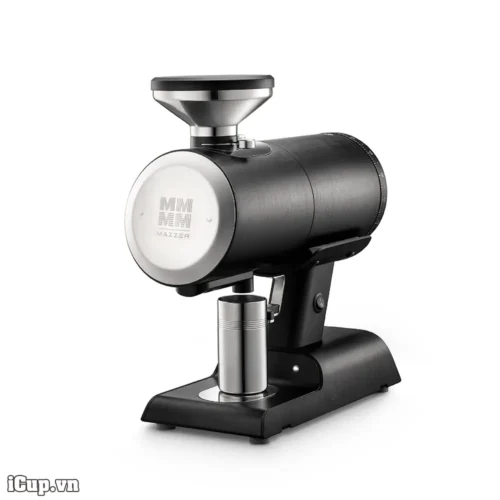
SEE RECOMMENDED COFFEE GRINDERS TO USE WITH THE MARAX3



SEE OTHER HOME ESPRESSO MACHINES


iCup proudly brings customers the finest coffee brewing tools in the world.




Reviews
There are no reviews yet.